vândut de libris.ro
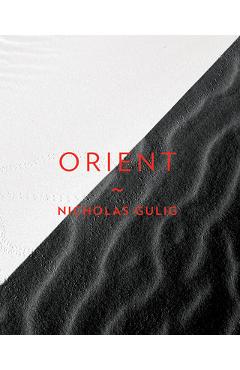
Poetry. With the ethical reach of George Oppen or Etel Adnan, but with a scope and feel all his own--and now, because he gave it to us, ours too--Nicholas Gulig takes stock of our world of war and forced migration, our world of wanderers we only know of and feel nonetheless. So what to do about it? he asks. Its beginning to feel a lot like Im at fault for something far away. Yes. Its been feeling that way since we first woke up and found ourselves no longer children, because the war began, or the towers fell, or because we speak a language and are an empire. How, then, to find our way into and remain in love with those who are near and those who are not, and remain there, unflinching, awake? Poetry is a way, poetry like this--quiet and sudden and forgiving and strong. Read not for solace, but for love.--Julie Carr In ORIENT, we are immersed, immediately, in the way these poems both quietly astound and articulate the vital emptiness of what disturbs and is absorbed in hint and hue through transcription, collage, and other practices of memorys recollection and erasure, admiring along the way the speakers effort to illustrate how a field between polarities begins to open outward. In doing so, Nicholas Gulig delves into the ways we must consistently try and fail to orient ourselves to the junctures between the ancient and the present conditions of our time--and all that fails our speech and yet endures in language and our listening attentively to its noises. Throughout the work, we have poems that are both a reckoning and a recording, which, as Gulig writes, are also forms of wandering. Ultimately, ORIENT arrives at its poignant narrative and nationality, a state of pure emergency, made possible by Guligs singular sense of presence, of speaking directly to what signals empire for the poet who lives within it. This is an astounding collection.--Prageeta Sharma Nicholas Guligs riveting new collection ORIENT considers what it means to be a global citizen in the information age. These urgent, exciting poems ask us how we mediate the distance between the person at a computer watching the war on the news and the person who is in a war zone. How do we mediate language when one is writing about war that happens elsewhere but is intimately felt? The muscular sound and syntax of these poems jostle and pull us uneasily into its fragmented, tension-filled world. Language is a residue. / I cling, states the speaker, and the words residue and cli
Preț:
Vânzător: Libris.ro
Brand: Nicholas Gulig